Notes
May 2026
Note (2026-05-04 19:51)
黑心厂还没倒闭呢

Note (2026-05-03 18:20)


April 2026
Magic by Return of Post: How Mail Order Delivered the Occult (2026-04-23 05:50)
In a time increasingly shaped by Taylorist factories and scientific materialism, Weber ultimately misread modernity, and his account of disenchantment confused modernity’s growing spiritual liberalism with large-scale secularisation. That is, Weber believed that the declining adherence to Christianity (which was unmistakable) signalled that the numinous had faded from modern life (which couldn’t have been further from the truth). Modernity and scientific materialism didn’t really get rid of spiritual practice as much as abstract it from an inherited, communal framework. What modernity had in fact created was a radical redistribution of belief, in which the rationalist currents presumed to have extinguished faith in powers and presences beyond oneself became the very means by which one could learn about these otherworldly forces from the privacy of one’s own home.
In addition to his courses on voguish practices like hypnotism and clairvoyance, Flower’s 1902 course, The Mail-Order Business, guided aspiring entrepreneurs in generating success similar to his own. Described here to readers and deployed elsewhere with relish in his own business, his favourite marketing strategy was the dark art of multiplying corporate identities, of creating new imprints, supposed “departments”, and fictive company names in order to project an illusion of institutional scale and influence. A reader encountering the New Thought Publishing Company, Research Publishing Company, or the Penny Classics series could easily assume that these were each independent bodies, rather than the handiwork of Flower and a few hardworking secretaries. Later, Flower employed an agent by the name of T. W. Henry, who ran the same operation from London to serve European customers, although it was the American market that was most rapidly expanding. Flower created, in effect, an early form of what we might now refer to as “market segmentation”, allowing him to speak to several distinct audiences while maintaining a single underlying operation from the Masonic Temple in Chicago.
[…] More
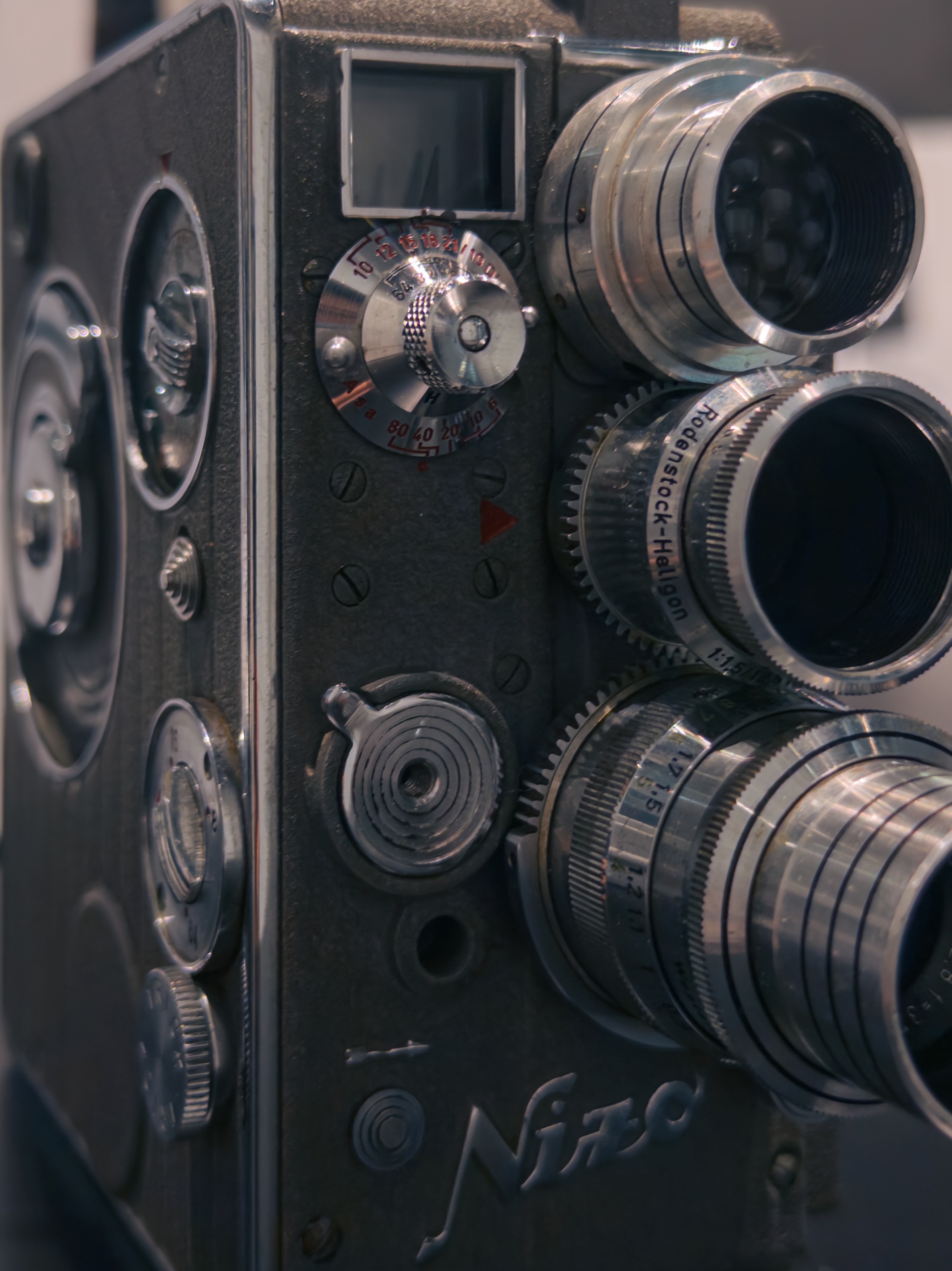
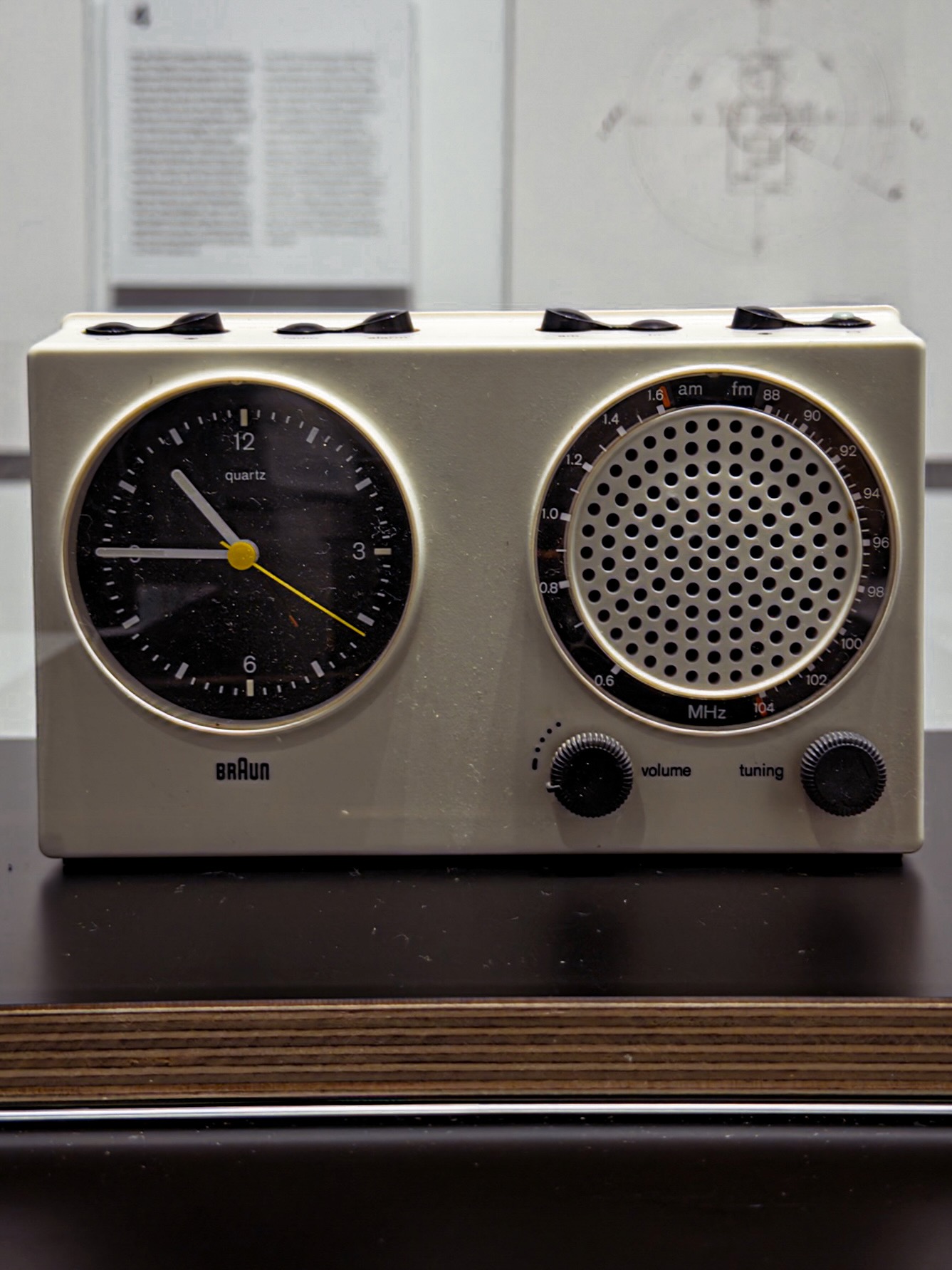
Exhibition: Dieter Rams — Less, but better (HKDI Gallary) (2026-04-18 17:36)



How to walk through walls (2026-04-15 01:25)
The game, Gwern writes, just “pretends to be made out of things like ‘walls’ and ‘speed limits’ and ‘levels which must be completed in a particular order.’” But what it actually is, at a deeper level, is bits, code, memory locations, processing units, and so on and so forth.
Most systems can be viewed at multiple levels. There is a superficial system which pretends to be made of one thing (walls, hens). But actually, it is really made of something else (bits, memory allocations). And if you learn to understand that underlying system, you can find ways to use the lower-level details to steer the system in a way that looks incomprehensible to those who only see the more superficial system.
Companies and governments like to pretend to be formal, machine-like systems, where things have to be done in a specific way. But this, just as in the case of the video game pretending to be made of levels, is an abstraction. A fiction. Actually, a bureaucracy is just people and some file systems. Calling and asking to speak to a supervisor, or showing up in person, or finding the specific person who handles your case, often lets you bypass the “system.”
Part of what makes a person creative is his lack of emphasis on things technical. […] [I]f you are someone who is already creative, and then you become technical, then you are unstoppable.
The Passions and the Interests (2026-04-15 00:50)
If the pursuit of self-interest will rein in barbaric passions and thereby promote freedom and peace, the appetite for peace and prosperity may culminate in the unintended consequence of stifling the desire for freedom.
Note (2026-04-11 15:24)
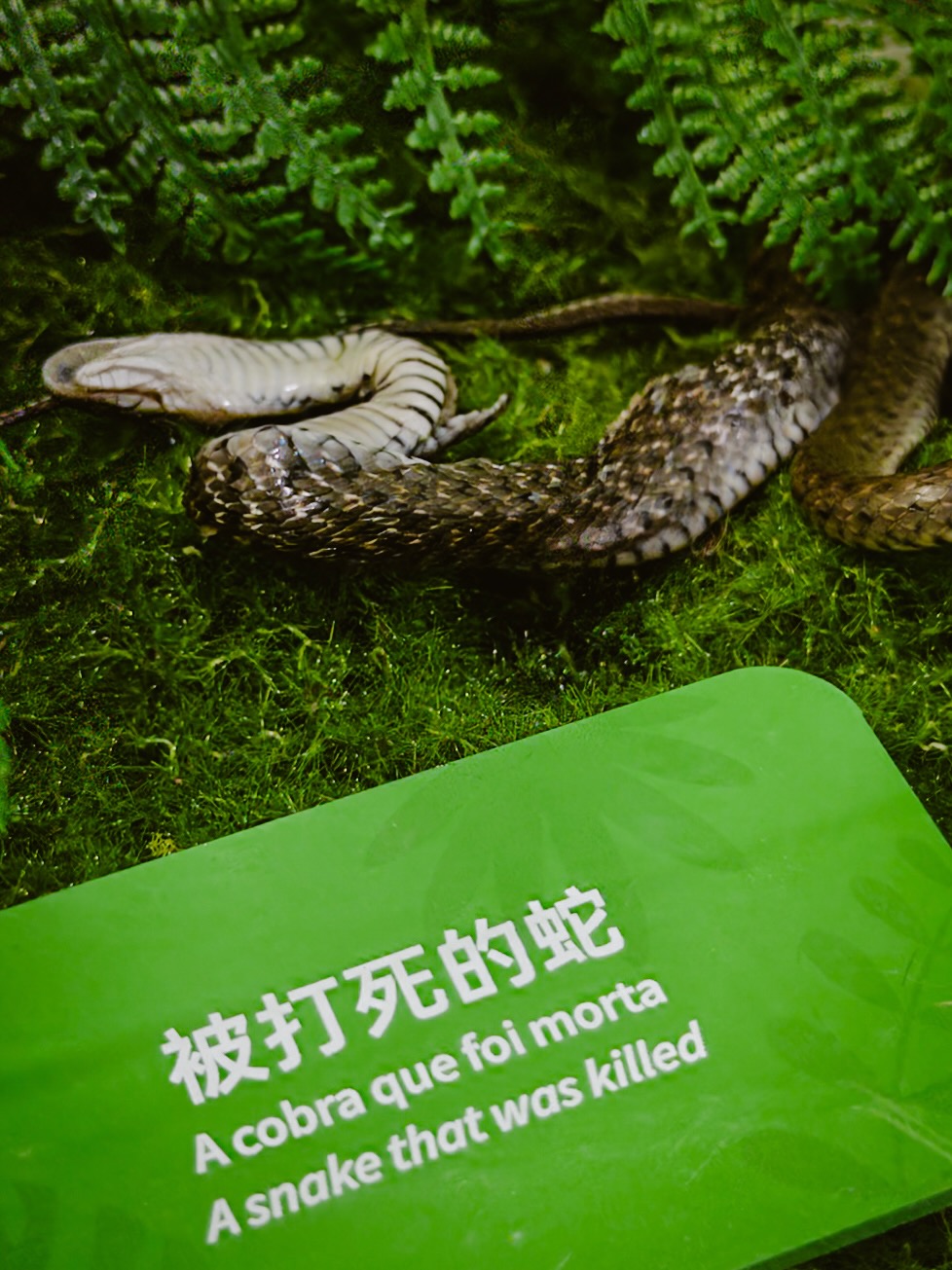
何意味?
Keyboard Warrior (2026-04-09 17:51)

Why chatbot therapists can’t offer what we need (2026-04-09 07:29)
The contrast between them encapsulates a problem that therapy chatbots face. While they can imitate the language of therapy and reliably deliver a pastiche of validation, they cannot innovate an embodied response to you – a response born from being changed by what they witness. Consider the role of silence; while therapists sense what it holds, LLMs are not changed by silence. For them, silence isn’t training data.
During the therapeutic process, there is a kind of knowledge gained through unconscious mirroring of posture, experiencing shared emotions, imagining oneself in ‘another person’s shoes’. Feelings aren’t peripheral to this process; they’re central to it. This gets at one of psychotherapy’s oldest conundrums: is success the outcome of the quality of the relationship, or the inventory of the therapist’s skills? If therapy is effective through the transmission of information – asking the right questions, reframing the right issues – then machines will suffice. But if the relationship itself is therapeutic, if something emerges in the encounter that cannot be reduced to technique, then we are in a different realm.
it was in that gap between silence and presence where therapy nurtures. It does not offer information, but anchorage. The sense that you exist for someone else. That your suffering has been registered in another human being who will carry it forward and might be moved to act differently because of it. The witness doesn’t just hear your story; they become part of it.
Our societies have now been optimised for depersonalisation, yet they masquerade under the illusion of its opposite: personalisation.
Recognition is not the same as being witnessed.
In the therapeutic encounter, as in life, there are moments before we have linguistically categorised anything, anyone. Humans are landscapes to awe us; LLMs, however, are never speechless.
How to get to know your neighbourhood (2026-04-09 07:27)
‘Official’ signs are those put up by a recognised organisation – perhaps a public one, like a city government, or a private one, such as a housing development or residents’ association. Notice which official entities are communicating with people in your neighbourhood. What do they say? Do their signs inform, enforce, keep you in, keep you out? These official signs can reveal something about who holds power, who owns land, whose interests are most protected. If there are lots of private ‘official’ signs, that might tell you about the private interests that hold sway. If many of them (or few of them) are local government signs, that might tell you about levels of civic investment. Also consider what kinds of names are used for the neighbourhood’s streets or public buildings. Where do these names come from?
A neighbourhood’s ‘unofficial’ signs are often as essential, powerful or respected as the sanctioned, official signs – just like the original street signs in Villa 31. Across my New York City neighbourhood of Washington Heights, many local businesses put signs in their windows (‘We love immigrants’) to send caring and non-commercial messages to the community. There are also postings for stray cats to adopt and school ‘open houses’ to visit. There are markers where people have died: a white bicycle for a cyclist hit by a car; a profusion of flowers where someone was killed by gun violence. See if you can find unofficial signs in your neighbourhood that you haven’t paid much attention to before. You might find them on the street, outside homes, in the windows of shops, on lampposts. What do all these signs suggest about your neighbourhood? How many languages are used? Do these signs add to the official ones, or edit them, or protest them? Do they support or contradict each other?
[…] More
Agent Experience 导论 (2026-04-04 01:26)
螺莉莉:
AX defined
随着 LLM 技术应用的不断发展,Agent Experience(简称 AX),成为了显学,来开始在工程圈流通。Netlify 联合创始人兼 CEO Mathias Biilmann 于 2025 年 1 月在其博客发表 Introducing AX: Why Agent Experience Matters 一文,正式引入这一概念。
我认为需要将其拆成三个维度来看:用户怎么和 Agent 沟通 [一种输入质量问题],Agent 怎么和外部世界沟通 [一种输出可控性问题]。还有夹在中间最复杂的那一层:Agent 的内部状态怎么管理 [上下文管理问题]。
KV caching vs dynamic compression
动态上下文压缩和 KV 缓存之间有一个工程上的冲突。现在主流模型提供商(包括 Anthropic)都在做前缀缓存,推理时把已经转成 KV 向量的部分存起来,下一次请求如果前缀相同,可以跳过重新计算的开销,显著降低延迟和成本。Anthropic 的 prompt caching 按 tools、system、messages 的固定顺序分段处理,每段可以独立设置缓存控制点,支持最多四个缓存断点。问题在于前缀缓存要求内容严格一致,任何修改都会使该位置以后的缓存全部失效,而动态压缩天然要修改上下文,这两件事目前是相互矛盾的。
[…] More
Geist in the machine (2026-04-04 01:07)
We’ll begin by separating the dimensions of human uniqueness that philosophers and scientists have traditionally focused upon (intelligence, consciousness and personhood). But to make real headway, we’ll need to survey contemporary debates about the domains in which these key terms are operative (epistemology, aesthetics and ethics). Grappling with these controversies will then reveal the corresponding capacities combined in anything worth calling a soul (wisdom, creativity and autonomy).
Dimensions of Human Uniqueness
— The Turing Test
“Turing tests” dissolve the distinction between appearance and reality: if a machine can pretend to be a mind, then it simply is a mind.
In the decades since Turing proposed his test, philosophers and scientists have focused on three dimensions of human-likeness: intelligence, consciousness and personhood. [...] But in many cases, the terms are conflated, reducing debates about whether human-like machines are possible to talking at cross purposes.
— Intelligence
The AI paradigm developed in the 1950s and ’60s [...] followed Plato and Descartes in viewing intelligence as the capacity to acquire symbolic knowledge about the world (eg, “water boils at 100ºC”) and deduce solutions to practical problems (eg, how to boil an egg).
[Hubert Dreyfus] argues that the comparative robustness of human intelligence lies in our ability to navigate the relationships between factors and determine what matters in any practical situation. [...] [T]his wouldn’t be possible were it not for our bodies, which shape the range of actions we can perform, and our needs, which unify our various goals and projects into a structured framework. [...] [W]ithout bodies and needs, machines will never match us.
Under [the machine learning] paradigm, intelligence is defined simply as the capacity to solve problems. Current AI systems are built to find implicit rules using whatever non-symbolic representations work.
— Consciousness
[Consciousness is] understood in roughly two ways: either as something inward or outward. The simplest inward form is qualia, or what it’s like to have a certain experience, such as the redness of a sunset or the flavour of cocoa. [...] Beyond this is sentience, or the capacity for valenced experience [...]. Such interiority lies beyond the reach of Turing tests but, if it’s accessible only through introspection, it runs the risk of ineffability, making it impossible to analyse, let alone recreate.
[…] More
Why Tech Bros Are Now Obsessed with Taste (2026-04-01 00:18)
For tech bros, the word [taste] seems to have a pragmatic function. By their definition, taste is inherently profitable; it is the ability to discern what will make the most money, whether by choosing your next big software concept or by convincing users that your product is necessary.
We might call what’s going on now “taste-washing,” an attempt to give anti-humanist technologies a veneer of liberal humanism.
Another conclusion might be that the online ecosystem has become so polluted—so fragmented, deceptive, overstimulating, ersatz—that it has warped our ability to exercise taste at all.
March 2026
司法 AI 的分阶段发展模式 (2026-03-30 00:03)
司法 AI 的因果判断瓶颈:在人类认知中,因果推断往往被视为高级智能的重要组成部分。但从技术机理看,当下联结主义路径下的人工智能更擅长从既有数据中提取并复现统计规律,而难以把握规律背后的因果结构。这也构成了其在司法场景中难以胜任复杂推理任务的关键瓶颈。
司法 AI 的价值判断瓶颈:更进一步,即使人工智能能够模拟人类之“智”,它也未必具有法官之“智”。一方面,司法裁判是一种规范性的价值权衡,而 AI 的底层逻辑则是描述性的统计拟合,其缺少直接进行价值判断的能力。另一方面,法官进行价值判断时的专业思维与公众常识性思维之间也存在差异。一些学者甚至认为这种思维上的差异会导致法律人和常人大脑在生物学上的差异。法律专家在处理法律问题时更像是用规则去调控情绪,而普通人更像是用情绪去带动规则。[…]
[…] More
Note (2026-03-29 19:27)
The capacity to be alone depends on the sense of being held (2026-03-29 11:01)
The British analyst Donald Winnicott argued that the ability to be alone is not a personality trait but something that develops out of experience. His best-known line about solitude is deliberately paradoxical: ‘The basis of the capacity to be alone is the experience of being alone in the presence of someone.’ He meant that we learn how to rest, play and think on our own only after we have known what it feels like to be reliably accompanied, to have someone nearby who is not intrusive but also not absent. Over time, that sense of being held can be carried inside, making solitude feel safe rather than exposed.
[C]aregiving itself depends on how care is socially organised and shared. Attentive, non-anxious presence requires stability, time and collective support. In that sense, the capacity to be alone rests on a series of nested forms of holding, each one dependent on the next.
[T]he solitude I was struggling inside was not the absence of people, but the collapse of trust in anything outside myself.
[T]hinking is not a given but an achievement that depends on having had enough support for feelings to be transformed into thoughts. When pressure cannot be processed, when there is too much coming in and nowhere to put it, experience does not become reflection at all. Instead, it is discharged into action and vigilance.
From this perspective, the problem is not whether someone is physically alone, but whether their mind is free to wander or still on duty. When vigilance replaces containment, time alone does not become rest. It becomes another shift.
At the time, I thought grief had educated me, that it had made me more careful and responsible, more adult in ritual and form. I imagined that I had become the superstructure that had disappeared around us. In Winnicott’s terms, what looked like maturity was a very competent false self, a way of managing life when there is not enough support for spontaneity or play. But this was not maturity. It was pressure that could not become thought, hardening instead into vigilance. What might have become grief condensed into a heavy season that I mistook for adulthood.
[…] More
Labubu’s noodle house (2026-03-28 19:39)

“This Is Not The Computer For You” (2026-03-28 07:00)
He is going to go through System Settings, panel by panel, and adjust everything he can adjust just to see how he likes it. He is going to make a folder called “Projects” with nothing in it. He is going to download Blender because someone on Reddit said it was free, and then stare at the interface for forty-five minutes. He is going to open GarageBand and make something that is not a song. He is going to take screenshots of fonts he likes and put them in a folder called “cool fonts” and not know why. Then he is going to have Blender and GarageBand and Safari and Xcode all open at once, not because he’s working in all of them but because he doesn’t know you’re not supposed to do that, and the machine is going to get hot and slow and he is going to learn what the spinning beachball cursor means. None of this will look, from the outside, like the beginning of anything. But one of those things is going to stick longer than the others. He won’t know which one until later. He’ll just know he keeps opening it.
That is not a bug in how he’s using the computer. That is the entire mechanism by which a kid becomes a developer. Or a designer. Or a filmmaker. Or whatever it is that comes after spending thousands of hours alone in a room with a machine that was never quite right for what you were asking of it.
I was that kid.
On tools and toolmaking (2026-03-28 06:58)
“Tools don’t make you a better designer” feels like another version of the abused and misunderstood “less is more.”
Sure, the best camera is the one you have on you. But wouldn’t you prefer that camera to also be the best camera for whatever it is that makes you tick – a great sensor or glass, an amazing build quality, a friendly user interface, a logo that makes you want to step up, or some particular quirk or sentiment that you can’t even explain, but matters a whole lot to you?
I’m told I should be annoyed if someone’s first reaction to seeing a nice photo I made is “what kind of camera do you use?”, as it diminishes my accomplishments as a photographer. But: I chose the camera, and bolted on the appropriate lens, and realized over the years the aperture priority mode and very precise focus area is what makes my brain happy.
Maybe it’s the 1960s typewriter you need, or a newfangled e-ink-based writing implement, or maybe you just have to open TextEdit and close everything else. I’m not going to tell you the novel comes out then. But the novel might never come out if you don’t figure out what tool can help get it out of you.
Read the macOS update progress bar (2026-03-27 06:44)
When the Software Update pane offers a macOS update, it has already done a lot of the preliminary work, in fetching the catalogue of updates, checking through them to determine which could be installed, and working out what that would require. This enables it to provide a first estimate of how much needs to be downloaded. Note this is only an estimate at this stage, and may not include additional components such as an update to Rosetta 2.
Before the download can begin, softwareupdated has initial preparations to make, including reloading and downloading the Update Brain responsible for much of the task of installation. Following that are extensive preflight checks, and together those account for the first 15% of the progress bar shown. On a fast Apple silicon Mac, the progress bar may jump straight to that 15%.
[The download] starts at that arbitrary 15%, and is completed when the bar reaches 55%. In between those it should progress according to download speed, but that can be highly non-linear.
As soon as the download is complete, there’s another preflight phase lasting from 55%-60%, then the downloads are prepared for installation. This phase doesn’t apparently involve their decompression, which is largely performed on the download stream during the download phase.
Preparations are arbitrarily assigned a period of 30 minutes to complete, but now seldom if ever require that long. As they’re allocated to the last 40% of the progress bar, this phase usually completes much quicker than the times given.
The final 5 minutes are often the slowest, and can take a few minutes longer than that, as the files for installation are gathered into a ‘stash’ ready for the Update Brain to install. Because the progress bar tends to jump straight from 95% complete to 100% this can make it look as if the update has frozen.
[…] More
Skirt length oscillations (2026-03-26 06:34)
In a new study, the Northwestern team developed a new mathematical model showing that fashion trends tend to cycle roughly every 20 years. By analyzing roughly 37,000 images of women’s clothing spanning from 1869 to today, the team found that styles rise in popularity, fall out of favor and then eventually experience renewal.
Using custom tools, they measured key features of dresses—hemline, neckline and waistline positions—turning clothing designs into numerical data that could be measured and tracked across decades. To analyze the data, researchers built a mathematical model based on a simple idea: the tension between wanting to stand out while still fitting in. Once a style becomes too common, designers move away from it—but not so far that the clothes become unwearable.
“Over time, this constant push to be different from the recent past causes styles to swing back and forth,” Abrams said. “The system intrinsically wants to oscillate, and we see those cycles in the data.”
But this pattern has lost its clarity in recent decades. Starting in the 1980s, the data show a wider range of skirt lengths appearing at the same time, suggesting that fashion trends are becoming more fragmented. Rather than one dominant trend, niches emerge, reflecting more diversity in fashion.
Windows 95 defenses against installers that overwrite a file with an older version (2026-03-25 07:04)
Back in the days of 16-bit Windows, many system components were redistributable, meaning that programs that used those components could include a copy of those system components and install them onto the system as part of the program’s installer.
It was common for program installers to overwrite any file that was in their way, regardless of the existing file’s version number. When these installers ran on Windows 95, the replaced the Windows 95 versions of the components with the Windows 3.1 versions.
Windows 95 worked around this by keeping a backup copy of commonly-overwritten files in a hidden C:\Windows\SYSBCKUP directory. Whenever an installer finished, Windows went and checked whether any of these commonly-overwritten files had indeed been overwritten. If so, and the replacement has a higher version number than the one in the SYSBCKUP directory, then the replacement was copied into the SYSBCKUP directory for safekeeping. Conversely, if the replacement has a lower version number than the one in the SYSBCKUP directory, then the copy from SYSBCKUP was copied on top of the rogue replacement.
An earlier design simply blocked the installer’s attempt to overwrite the file, but this ended up creating more problems.
The way that worked best was to let the installer overwrite anything it wanted and then go back and try to clean up the mess.
Do You Actually Have to Finish That Novel? (2026-03-23 23:22)
And it’s true, in a lifetime of nonfinishing I have learned that the practice [of not finishing a book] can be its own way of reading, even a way of admiring the book I seem to be spurning. Sometimes I am so intoxicated by the beauty and the intelligence of a novel that I must set it aside. The charge it delivers is so inordinate that I need to measure out the doses I permit myself. (Giuseppe Tomasi di Lampedusa’s The Leopard is one such book for me.) Or I put the book down because I fear its force. It’s so good I worry it will smother every last spark I need for my own writing (which is how Virginia Woolf felt about Proust).
Something in the structure of the work demands [not finishing] it, demands it because it touches something in the structure of our lives. This is true of any work arranged around a plot, however loose, and it is true because the worlds of these works (novels, plays, movies, TV series) have a beginning, a middle, and an end. They have a beginning and a middle because they have an end. When dealing with them, like it or not, we must deal with the end, their end and ours.
Like every reader, I know instinctively that events gain in significance as the end draws near. There are ups and downs throughout, but once you enter the homestretch, the up-and-down logic changes. Time no longer flows but starts ticking, and the space of possibilities narrows.
Unlike life, the novel does not just break off midstride; it ends, which means that things come to a close—not all things, but enough of them. Plotlines are tied up—sometimes neatly, sometimes not. What seems like a knot is in fact an unknotting (the literal meaning of dénouement in French), an untangling.
[…] More
黄金“避险逻辑”是否失效? (2026-03-21 23:16)
罗志恒:
黄金作为无息资产,其持有机会成本高度取决于资金成本与利率水平,继而直接受到美欧货币紧缩预期升温的冲击。
资金在高位获利了结,抛售离场。此次美伊冲突并不是毫无征兆的“黑天鹅”事件,早在 2026 年初,美伊谈判就陷入僵局,美国加速军事集结,这都是有迹可循的,市场也早已提前定价。
权益市场受波及,产生连锁反应,杠杆与流动性恐慌形成对黄金的集中抛压。[…] 随着股价持续下跌,这些高杠杆的多头头寸面临巨大的强制平仓压力,投资者需要在短时间内筹措资金以满足清算要求。在此背景下,前期累积了较高浮盈的黄金便成为变现的首选标的。
“乱世黄金”本身就是市场对黄金的误读,当真正的战争爆发、经济金融危机来临时,黄金也只是变现手段。
当前的定价逻辑使黄金更接近“风险资产”。[…] 2022 年起央行购金加速,成为推动金价走高的主要力量。[…] 央行持续购金并没有对私人投资产生“挤出效应”,反而提高了私人投资需求。[…] 私人投资需求的增长主要由投机资金驱动,这造成黄金交易结构短期恶化,多头交易拥挤,进而使黄金的短期走势愈发受投机情绪与资金流向主导,波动性显著放大。
[…] More
Gendered Genres: Women’s Poetry in Post-Mao China (2026-03-21 22:07)
However, it was precisely this marginality that enabled poetry to maintain a critical distance from the cultural mainstream, thereby fostering renewed vitality and transforming it into an alternative space of discourse (Yeh 1992: xxiii). After 1976, the equally marginal independent publishing scene further sustained this transformation, when some journals broke away from politically orthodox content and formulaic rhetoric to actively explore new modes of expression and circulate innovative poetic forms.
During the 1980s, the exploration of subjectivity initiated by Shu Ting [舒婷] was further developed by a group of women poets who infused it with a distinctly gendered dimension. Unlike Shu, they focused more specifically on the emotional and psychological worlds of the female self, often engaging with unconventional subjects and striking imagery (Zhang 2002: 108).
Shu Ting’s (b. 1952) To an Oak (致橡树) [is] a poem that explores the possibility of a gender-equal relationship grounded in women’s autonomy.
Motivated by a desire to respond to her generation’s ‘dire need of respect, trust and warmth’, Shu Ting (1995: 85) avoids ideological constraints, using poetry to contemplate the human condition in its widest sense. Indeed, her concern is the recovery of an emotional world—desires, hopes, insecurities, and frailties—that defines humanity before gender.
Equally significant was the influence of American confessional poetry, which enabled emotions—frustration, anguish, fear, and guilt—to be publicly voiced and transformed into a collective experience (Zhang and Chen 2016: 154). Sylvia Plath became a model for writing that foregrounds women’s lived realities.
[…] More