Notes
December 2025
Note (2025-12-22 22:10)
“On Citations, AI, and ‘Not Reading’”:
[T]he problematic way in which we use referencing as a signaling mechanism rather than purely as an epistemological phenomenon.
There is more to read in the contemporary world than can be read within a single lifetime. Therefore, all reading is subject to a type of economic decision making that rests on time as the unit of currency that is to be spent by an individual.
prayer (2025-12-20 11:54)

Note (2025-12-20 06:31)
karpathy reviews LLMs’ year of 2025:
Reinforcement Learning from Verifiable Rewards (RLVR) emerged as the de facto new major stage to add to this mix. By training LLMs against automatically verifiable rewards across a number of environments (e.g. think math/code puzzles), the LLMs spontaneously develop strategies that look like “reasoning” to humans - they learn to break down problem solving into intermediate calculations and they learn a number of problem solving strategies for going back and forth to figure things out (see DeepSeek R1 paper for examples). These strategies would have been very difficult to achieve in the previous paradigms because it’s not clear what the optimal reasoning traces and recoveries look like for the LLM - it has to find what works for it, via the optimization against rewards.
Unlike the SFT [supervised finetuning] and RLHF stage, which are both relatively thin/short stages (minor finetunes computationally), RLVR involves training against objective (non-gameable) reward functions which allows for a lot longer optimization. Running RLVR turned out to offer high capability/$, which gobbled up the compute that was originally intended for pretraining. Therefore, most of the capability progress of 2025 was defined by the LLM labs chewing through the overhang of this new stage and overall we saw ~similar sized LLMs but a lot longer RL runs. Also unique to this new stage, we got a whole new knob (and and associated scaling law) to control capability as a function of test time compute by generating longer reasoning traces and increasing “thinking time”. OpenAI o1 (late 2024) was the very first demonstration of an RLVR model, but the o3 release (early 2025) was the obvious point of inflection where you could intuitively feel the difference.
We’re not “evolving/growing animals”, we are “summoning ghosts”.
Supervision bits-wise, human neural nets are optimized for survival of a tribe in the jungle but LLM neural nets are optimized for imitating humanity’s text, collecting rewards in math puzzles, and getting that upvote from a human on the LM Arena. As verifiable domains allow for RLVR, LLMs “spike” in capability in the vicinity of these domains and overall display amusingly jagged performance characteristics
[…] More
Note (2025-12-17 21:47)
“People Are Too Big to Fit Inside Our Heads”:
As long as we’re alive, we never completely coincide with ourselves. We’re free to go beyond what we’ve been and change. To treat someone as an object that you can understand and predict, therefore, is a bit like killing them, as Bakhtin writes. It’s to deny what’s most deeply human in us.
Note (2025-12-14 15:45)
“Why the World Should Worry About Stablecoins”:
“For the rest of the world, including Europe, wide adoption of US dollar stablecoins for payment purposes would be equivalent to the privatization of seigniorage by global actors.” This then would be yet another predatory move by the superpower.
Yet the [Bank for International Settlements] is also concerned that stablecoins will fail to meet “the three key tests of singleness, elasticity and integrity”. What does this mean? Singleness describes the need for all forms of a given money to be exchangeable with one another at par, at all times. This is the foundation of trust in money. Elasticity means the ability to deliver payments of all sizes without gridlock. Integrity means the ability to curb financial crime and other illicit activities. A central role in all this is played by central banks and other regulators.
Note (2025-12-13 10:21)
《當偶像突然變成系統敏感詞》:
即使追星和國家敘事表面上都有情緒、儀式、象徵物,即使有人會問:它們難道不是同一種情緒動員機制嗎?但它們的本質恰恰相反。
那是因為,國家的儀式、口號、循環播放的聲音,是排他的、單向的、要求一致性的:它把人組織成一個「必須相同」的整體,你必須相信、必須感動、必須站立、必須沉默。
而我們在演唱會里感受到的,卻是完全不同的東西:它是非強制的、開放的、自願的;它允許每個人帶着自己的傷口、自己的故事、自己的目光進入這個共同體。
比起在古拉格相關的文本中尋找可以譴責古拉格的點,更重要的是,詢問這些文本如何使得古拉格成為可能,(這些文本)可能至今仍在自圓其說,讓難以忍受的真理直到今天仍被廣泛接受。關於古拉格的問題,提出的角度不應是做錯了什麼(把問題降至理論的維度),而應該把古拉格作為一個存在着的現實來討論。
[…] More
Note (2025-12-11 06:24)
“I am a Stranger” [我是陌生人] by Xiang Biao [项飙], as an introduction to the book Hello Stranger [你好,陌生人], CITIC Press (2025).
Translated (with abbreviation) by David Ownby; supplemental translations and emphases mine.
[I]t was only in modern times that “stranger” became a relatively stable concept, after a long period in which the idea occupied a prolonged intermediate status somewhere in between.
只有到了现代,“陌生人”成为一个相对稳定的概念,他们长期处于既不是敌人也不是客人的中间状态。
In fact, the realization that there are many people in the world that we don’t know—and that these people might at the same time be connected to us—is itself a modern phenomenon.
意识到世界上有很多我不认识的人,而且这些人可能和我有关,这本身是一个现代现象。
If one of the defining features of the modern era is that people came to understand that distant strangers might be related to them, today the reverse seems to be occurring: we are starting to feel that people we know are unfamiliar to us. Ultimately, this kind of alienation also means that we become strangers to ourselves, unable to recognize who we truly are and what we really want.
如果说,在经典的现代状态下人们意识到陌生人是跟自己有关的,那么在今天,人们感到认识的人和自己无关。到最后,“陌生化”也意味着自己成了自己的陌生人。自己不能够认得自己究竟是谁,不知道自己要什么。
[…] More
Note (2025-12-10 22:00)
“Reading Lolita in the Barracks”:
A bugle call jolts you awake, bringing the dislocation of waking up in a strange place. You’re expected to spring up and fold your sleeping pad. If there's a straggler, the entire platoon must hold a punishing pose resembling a downward dog, often for a full hour. To this day, you still don’t understand why people pay to do yoga.
While I was sad to leave the friendships I'd forged in that blitz, I was suspicious of this orchestrated intimacy — one that must be reliably reproducible in Nonsan, under the engineered conditions of shared misery and resentment toward our drill sergeants. Was this kind of ready-made camaraderie the particular fiction that underwrites the enterprise of war? In the end, I’d never see most of them again. Perhaps friendship is what’s born of shared sensibilities, and we reserve the word camaraderie for what’s born of shared hatred.
Yongsan Garrison is the strangest place I’ve ever been. Having lassoed a prime stretch of land in the now-fashionable Itaewon district, it occupied more than half the area of Central Park, right in the heart of Seoul. But on Google Maps — coordinates (37.54, 126.98) — you’ll find a conspicuous blank space where it should be.
To put legions of young men on the cusp of manhood together is to create a petri dish of male ego. The military can serve as, to steal a phrase from D. W. Winnicott, a permanent alternative to puberty.
Even within the same rank, your month of enlistment mattered. An August recruit (me) was forever junior to a July recruit of the same year; it was common to call someone by their enlistment month. I was, for a time, simply “August.”
[…] More
Note (2025-12-10 19:15)
Romantasy’s protagonists tend not to bear the burden of personhood too heavily: they are perfectly plastic creations, stiff to the touch but moldable as needed.
Romantasy sex scenes function not as spicy interludes between events but as critical moments of world-building and character formation, much like song-and-dance sequences in musical theater.
The adjectives “primal” and “feral” appear frequently in romantasy, most notably in the work of Maas, who has made something of an art of using them as much as possible.
Series such as Twilight and Harry Potter “molded generations of young readers who have grown up but still crave big fantasy novels — now with a dose of erotica,”
At the highest level of abstraction, this kind of remixing carries a whiff of what the critic Jason Farago termed, in 2023, the “glacially slow Ferris wheel” of contemporary culture, “cycling through remakes and pastiches with nowhere to go but around,” although down in the trenches of fan culture it is a sign of the genre at work.
Romance and fantasy are each dominated by distinct tropes, but romantasy takes this feature and turbocharges it. The internet, and TikTok in particular, has made it easier than ever for the selection of tropes to precede the acts of reading and writing. In January, Katy Waldman reported for The New Yorker that trope-oriented hashtags allow romantasy “authors to tune their creative process to the story elements that are getting the most attention online,” just as readers can use them to sort through the digital muck and locate the stories most to their liking, be they “broody protector,” “shadow daddy,” “morally gray,” “secret stalker,” “star-crossed lovers,” “opposites attract,” “Hades and Persephone,” “magic academy,” “virgin,” “dark elves,” or, among many others, “I can fix him.”
The romantasy protagonists sure are powerful (and they never give up), but, at critical junctures throughout their stories, they also exhibit a strange, inert kind of power, as if they have all the trappings of agency but none of its substance. The scholar Regis noted that the heroines of traditional romance novels win a “provisional” freedom in their happy endings: “freed from the barriers to her union with the hero,” they are nevertheless bound by their relationships to society. The empowered women of romantasy experience a provisional freedom not by virtue of the patriarchy, but by virtue of the fairy tale as literary form. Living in non-allegorical Secondary Worlds, especially ones with imperatives toward happy endings, the prominent characters of romantasy are overdetermined, by fate and by trope alike.
[…] More
Note (2025-12-09 06:31)
“LLMs Make Legal Advice Lossy”:
It is a totally normal part of a functioning lawyer’s day to mentally scale levels of abstraction like this, picking and choosing where to stand the client, what to point at, and what to leave out.
Getting good at neither coddling nor firehosing clients is a significant part of the difference between being a good law student and being a good lawyer. If you learn all the rules, exceptions, and citations and stop there, you are at best fully qualified to practice law badly. Practicing law is often partly teaching law, but unless the job is law professor, rarely are we called upon to teach anybody everything on any particular point. Hiring a lawyer is not attending law school secondhand in installments.
To summarize a summary is not just to compress an already compressed explanation, but also, often, to reword it. Choice of words can be important in what I do. Not inevitably in the cartoonish way those with little experience of the law tend to suppose, where failing to say exactly the right thing makes no magic. In a more serious way affecting how much advice my clients need, longer-term.
When a client uses a chatbot to effectively rewrite my guidance, I lose control of how worthwhile terms get introduced. I lose control of how they’re sprinkled through the text later, to develop fluency. Both content and presentation end up on invisible autopilot. There is no bright line between those in the law.
I need to keep pushing myself, and setting clients up to push me, toward plainer, shorter, better organized writing. We also need to stay on the level. If clients are in positions that drive them to interpose chatbots between us, whether out of verve for the tech or simply under time crunch, I should be making it clear that’s something they should unhesitatingly tell me. I should be prompting them to say so.
[…] More
Note (2025-12-08 22:26)
“Sam Altman’s Dirty DRAM Deal”:
[T]he shock wasn’t that OpenAI made a big deal, no, it was that they made two massive deals this big, at the same time, with Samsung and SK Hynix simultaneously.
Had Samsung known SK Hynix was about to commit a similar chunk of supply — or vice-versa — the pricing and terms would have likely been different. It’s entirely conceivable they wouldn’t have both agreed to supply such a substantial part of global supply if they had known more.
[I]t sure seems like a primary goal of these deals was to deprive the market.
Normally, the DRAM market has buffers: warehouses of emergency stock, excess wafer starts, older DRAM manufacturing machinery being sold off to budget brands while the big brands upgrade their production lines…but not in 2025.
Companies had deliberately reduced how much DRAM they ordered for their safety stock over the summer of 2025 because tariffs were changing almost weekly.
Because of the hesitancy to purchase as much safety stock as usual, RAM prices were also genuinely falling over time.
Korean memory firms have been terrified that reselling old equipment to China-adjacent OEMs might trigger U.S. retaliation.
Note (2025-12-05 18:39)
Caixin on Global Central Bank Gold Purchases Hit 2025 High:
2022 年以来,黄金市场发生了一些结构性变化,包括私人、官方部门的需求显著增加,黄金不再是短期的避险工具,而是被越来越多视为长期战略资产和资产配置的核心。这个变化降低了黄金对传统驱动因素,比如美元、实际利率的敏感度,同时增加了市场的韧性。
大部分非发达国家的黄金储备是很低的,但正是这些官方机构的配置需求让传统的黄金定价模型失效。[…] 传统分析框架中,金价主要受实际利率、通胀及美元指数等周期性因素驱动,央行购金被视为这些因素导致的“结果”;而现在反而像“鸡生蛋、蛋生鸡”,去美元化的进程和金价的涨幅呈现非常显著的正相关,官方机构正在结构性增持黄金。
Note (2025-12-04 21:51)
cycling is at the same time the most useful and useless skill i picked up in the past year
Note (2025-12-04 06:50)
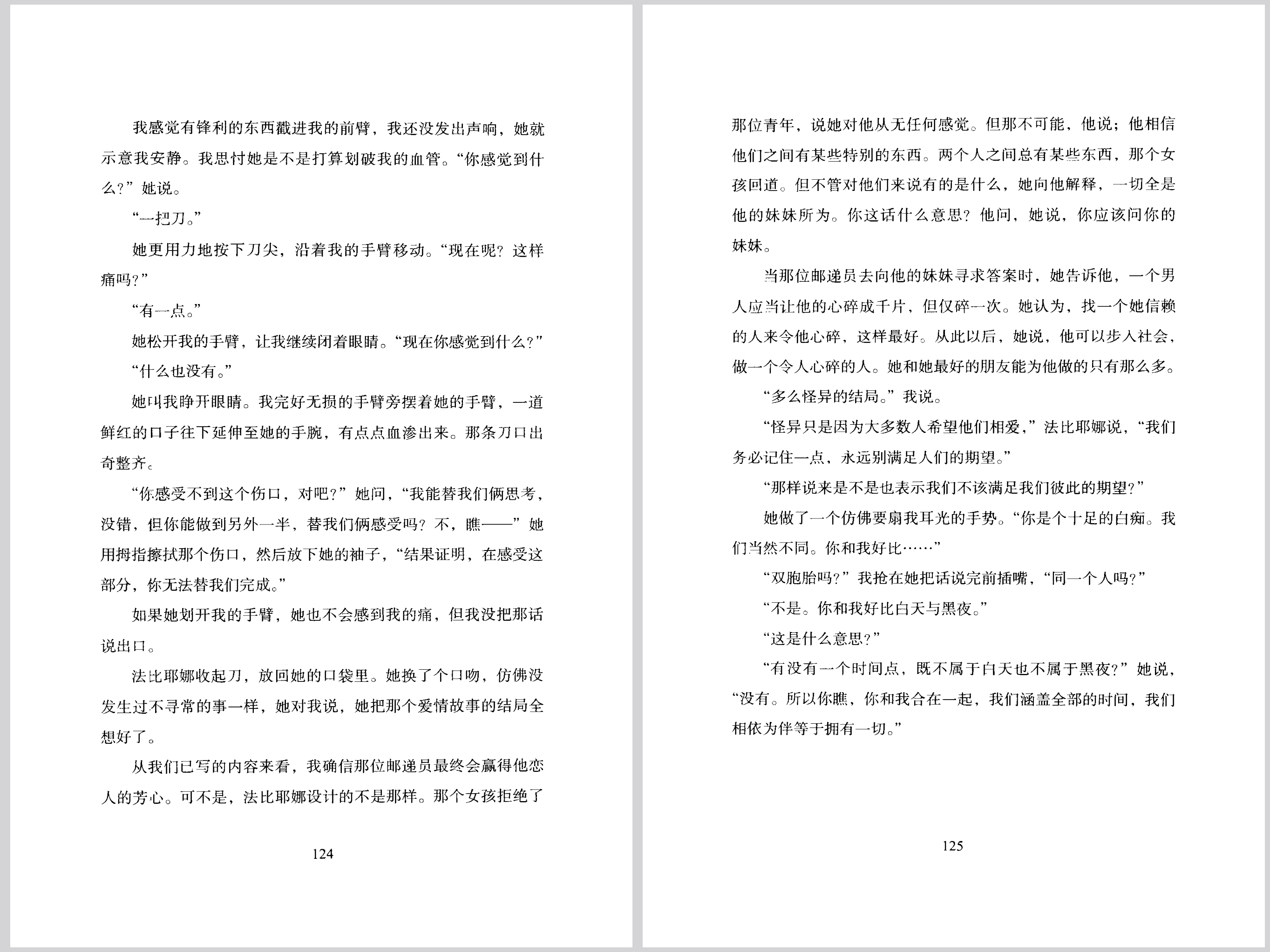
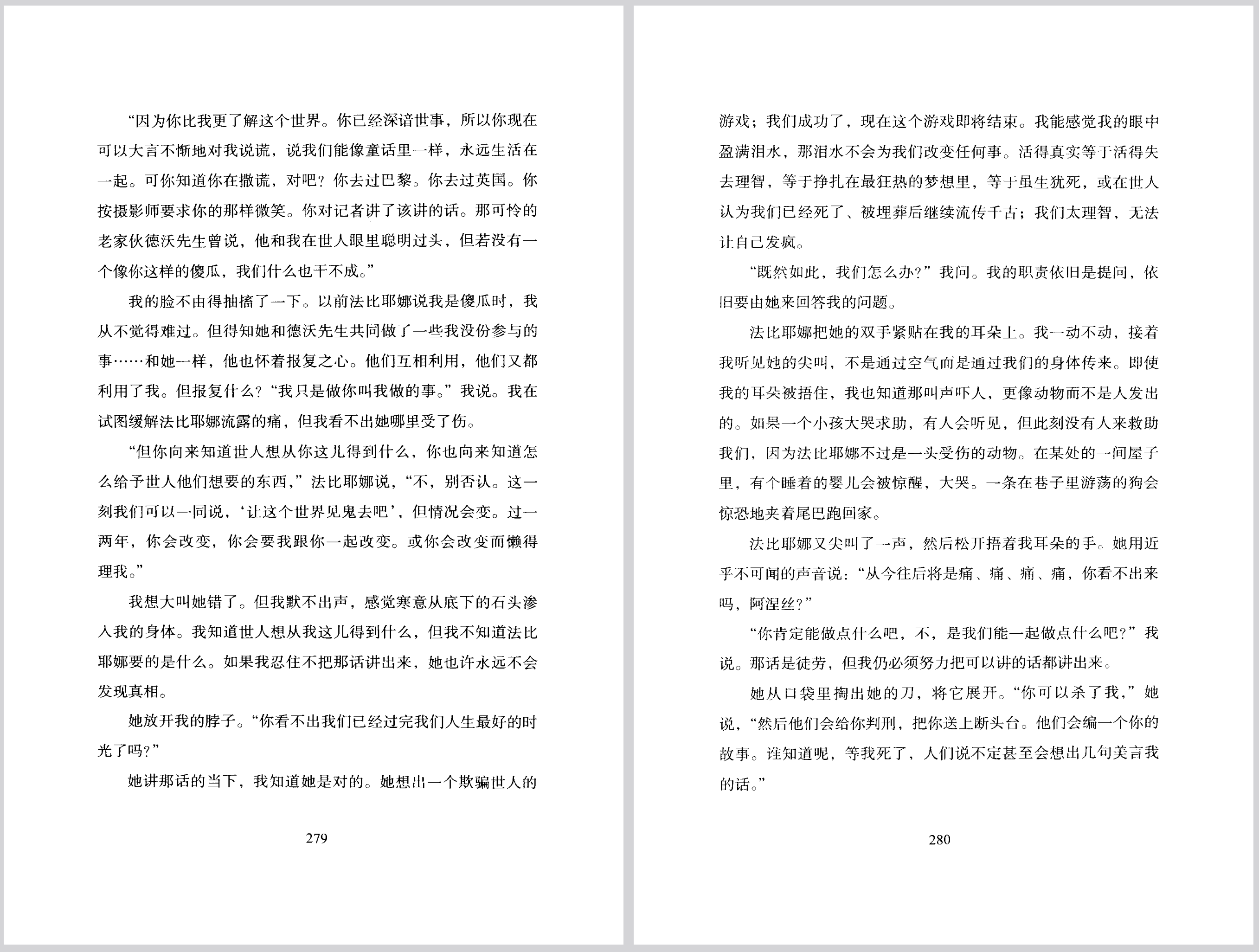
Li, Yiyun. The Book of Goose. Farrar, Straus and Giroux (2022).
America and fame: they are equally useful if you want freedom from your mother.
美国和名气:如果你想摆脱你的母亲、获得自由,这两者均有用。
The secrets inside me have not left much space for a fetus to grow.
我内心的秘密让可供胎儿成长的空间所剩无几。
If dead people had no choice but to become ghosts, Fabienne’s ghost would only scoff at the usual tricks that other ghosts take pride in. Her ghost would do something entirely different.
如果死去的人别无选择,仅可变成鬼魂,法比耶娜的鬼魂只会嘲笑这些其他鬼魂引以为傲的寻常把戏。她的鬼魂会做出一些截然不同的事。
Well-proportioned children are a rare happenstance. War guarantees disproportion, but during peacetime other things go wrong. I have not met a child who is not lopsided in some way. And when children grow up, they become lopsided adults.
身心均衡的儿童是难得的。由于战争,失衡成为必然,可在和平时期,其他方面出现问题。我没见过一个一切正常、没有偏差的小孩。而当小孩长大后,他们变成畸形的大人。
[…] More
Note (2025-12-04 00:59)
Note (2025-12-03 21:34)
It was a dual, almost paradoxical experience of both feeling that something I already know was getting articulated with a level of detail that I am myself incapable of—a level of detail I wasn’t even aware was possible—while also feeling provoked by it.
It is interesting how something can both feel like a clearer picture of what you already know and also a provocation. When an idea that I have had comes back to me in higher resolution, I notice that a lot of the details of how I’ve thought about it fail to add up. I recognize these as my thoughts, but also I see that they show me to be confused.
[W]e can imagine there is a limit where our actions can’t be further improved, and that limit is the Good.
The world has endless detail, variety, and nuance. Any attempt to define the right thing to do in the abstract (saying, for instance, that we should aim for human flourishing) will fail to take reality’s details into account. But when Murdoch says that the aim is to move toward the Good, she isn’t proposing an abstract goal; she’s saying that our aim should be to see reality as clearly as possible. If we can just see reality clearly, we will know what is Good in this specific situation.
[A]s Jane Psmith puts it, “the ‘authentic you’ is an incoherent half-formed ball of mutually contradictory desires and lizard-brain instinct.” (Murdoch calls the authentic you “a tissue of self-aggrandizing and consoling wishes and dreams.”)
She parts ways with the romantics and the existentialists in that she doesn’t believe in the notion that value comes from within.3 She doesn’t believe that things are good because we like them; she thinks that what is Good is independent of who we are; it is possible for us to feel good about the wrong thing. Hence, we cannot trust our inner voice; we need to figure out if it is right.
[…] More
Note (2025-12-02 06:45)
“Why you need your whole body – from head to toes – to think”:
But why are we so reluctant to consider the brain as just another part of the body? There’s no evidence that the brain is made of a different kind of ‘physical stuff’ from the rest of the body.
We need to start with the cells that compose our humble toes before zooming into the mystery of the brain. Why? Because our cells solve the biggest and most urgent problem of this great and mysterious adventure called life without a brain, and before we had a brain: how to stay alive.
[B]ecause our body is a living system governed by the basic law of self-preservation, this means that all our experiences are necessarily embodied self-experiences. In perceiving and experiencing the world, we ‘smuggle in’ our own fundamental self-survival goals.
A growing body of evidence from neurobiology and biochemistry suggests that cognitive categories such as ‘sensing’, ‘memory’ and ‘learning’ can be applied non-metaphorically to the behaviour of simple organisms such as bacteria.
[A]ll bodily cells and their complex interconnections [are] fundamental for cognition, not just neurons. Among our cells, the immune system plays a very special role, working in tandem with the neural system to help us build the ‘self’.
To put it bluntly: one can experience without thinking, but one cannot think without experiencing. Experiences come to the surface of being through the body, and not through the minds, or some sort of homunculus sitting in our heads, trying to ‘make sense’ of a world he doesn’t see, because the world is hidden in the black box of the scalp. We don’t perceive the world through some sort of inner solitary lens situated in our heads. We perceive the world through every single cell of our body.
[…] More
Note (2025-12-02 06:19)
“A Tale of Two College Towns”:
For Wikipedia, the college town is one where an institution of higher learning “pervades” the life of the place. Good enough. I like this verb, “pervade.” In cities or towns that have enough other things going on—places we wouldn’t, or shouldn’t, call “college towns”—it’s rather the place that pervades the school.
At its best, the small college in a small college town functions this way for the nonstudent residents, as a slightly mysterious world within the world that, while pursuing its own ends, expands everyone’s sense of what is possible.
For this to happen at all, the college has to be its own distinct place, present and familiar but in some ways opaque.
The otherworldly character of the liberal-arts college’s mission is obvious enough here: young Puritan theocrats studying, among others, older Puritan theocrats so that they can responsibly govern a Puritan theocracy. We are talking about shining cities on hills here. The SLAC makes up one component in a uniquely American fusion of utopianism as a tool of social reform, education as a tool of social mobility, and free real estate.
Horowitz rather diplomatically describes the reaction of the “college men” to this incursion:
They have perceived the especially diligent student as the “grind” and the student seeking faculty friendship as the “fisherman” or “brownnose.” Such terms of derogation have been necessary because college life has always had to contend with a significant number of students who have wanted no part of it—the outsiders. To the early colleges came some men for whom higher education was intended, those studying for the ministry.
Liberal education was for a very long time reserved to an elite—whence the word “liberal,” befitting free men—who were a small minority in Western societies. Gradually, except by the standards of the world at large, Americans began democratizing privilege.
[…] More
Note (2025-12-01 19:30)
“Everything Is Not Fine in the Art World”:
Auction houses rely on this sleight of hand. Their job is not to measure value. Their job is to perform it. Sarah Thornton wrote about this clearly in Seven Days in the Art World (2009), where she describes auctions as rituals rather than markets, spaces where belief is manufactured through choreography. Reading her work changed how I saw these rooms. The scripts, the coded gestures, the artificial suspense, the carefully timed applause, the way the room breathes in unison. None of it reflects the truth of what art is worth or what artists need. It reflects the truth of what the ritual requires. In that sense, last week’s evening sales looked exactly the way they meant to look: The paddles, the rhythm, the polished certainty. Everything was arranged to reassure the public that the system still works, that art still circulates as a luxury investment, cultural currency, and global status symbol.
Scarcity, visibility, community, and narrative are all tools that shape value. Artists do not need to mimic these strategies. They only need to understand how these tools are used and how they circulate.
Note (2025-12-01 12:30)
樓宇火災鮮少是單一失誤引發的「意外」,而更常是多重系統性故障的惡性連鎖,可能是設計的先天隱患,亦可能是日常維護的疏漏,以至緊急應變的失效。這些環節往往橫跨企業的層層部門與多位人員,難以鎖定單一「元兇」。這種分散性不僅模糊了因果鏈條,更讓傳統的個人化追責模式顯得力不從心。
一些法律觀點曾探索「聚合模式(aggregation approach)」的可能,即透過彙集多名員工的個別作為或疏忽,累積形成公司的整體犯罪意圖與行為。這一模式旨在捕捉公司失能的分散本質:單一員工的疏忽或許微不足道,但多重瑣碎失誤的疊加,可能構成系統性嚴重疏忽。然而,這創新想法在 R v HM Coroner for East Kent, ex parte Spooner (1989) 88 Cr App R 10 一案中遭明確否定。法院堅持,誤殺罪的證明要素必須針對「被告本人」獨立成立,而不能透過「拼湊」多人的零散證據來「合成」公司罪責。
[…] More
November 2025
Note (2025-11-30 21:20)
作為一項古老技藝,竹棚在其他地區越來越少見。近年來大陸多數城市已禁止用竹棚,2021 年住建部要求全面淘汰竹腳手架,香港和澳門成為為數不多讓竹棚存續的陣地。但今年 3 月,香港政府以安全為由,要求 50% 以上的公共項目必須使用金屬棚架,同時表示未打算完全淘汰竹棚,對此民間反對和支持聲並存。
香港建築業界使用大量竹棚有其重要理由。香港樓間距小、巷道窄,相比標準化的金屬架,竹棚能更靈活地適應不同施工環境。何炳德解釋,香港有許多樓齡超過 50 年的老樓,若搭建金屬棚架,需採取螺絲磚牆等更多設備、材料,住戶未必能接受。相較之下,竹枝重量輕,搭棚工人用「一把刀仔」就能工作,搭建速度快也靈活,作業空間需求小。
另有業內文章指出,面對香港常見的強風天氣,品質好的毛竹具有彈性但不易斷裂,這讓竹棚在大風中能適度搖擺而不塌,金屬棚架雖剛性強,但可能因局部失效而整體傾覆。在酷暑天,竹棚也不如金屬容易導熱發燙。
通常來說,建新樓或拆樓時用金屬棚架更好, 若是在舊樓中維修冷氣機等情況,使用竹的懸空棚架更為合理,兩者可以是互相補充而非取代的關係。
[…] More
Note (2025-11-30 06:21)
“How Good Engineers Write Bad Code at Big Companies”:
To pure engineers - engineers working on self-contained technical projects, like a programming language - the only explanation for bad code is incompetence. But impure engineers operate more like plumbers or electricians. They’re working to deadlines on projects that are relatively new to them, and even if their technical fundamentals are impeccable, there’s always something about the particular setup of this situation that’s awkward or surprising. To impure engineers, bad code is inevitable. As long as the overall system works well enough, the project is a success.
[I]t’s a mistake to attribute primary responsibility to the engineers at those companies. If you could wave a magic wand and make every engineer twice as strong, you would still have bad code, because almost nobody can come into a brand new codebase and quickly make changes with zero mistakes. The root cause is that most big company engineers are forced to do most of their work in unfamiliar codebases.
A pretty high percentage of code changes are made by “beginners”: people who have onboarded to the company, the codebase, or even the programming language in the past six months.
[The big companies are] giving up some amount of expertise and software quality in order to gain the ability to rapidly deploy skilled engineers onto whatever the problem-of-the-month is.
Note (2025-11-29 19:32)
But the pushback against #MeToo reveals a certain peril to storytelling as politics, not only in the retraumatization evident in the practice of revealing one’s most intimate harms before an infinite online audience, which could always include those listening in bad faith. But also, a discursive market opened up in which trauma became a kind of currency of authenticity, resulting in a doubled exploitation. This idea, while not very nice, lingers in the use of harm as an authoritative form of rhetorical defense. The problem here is not what is said, but how it is used. A friction has since emerged between an awareness of weaponization of harm and emotion and the continued need to express oneself as vulnerably as possible in order to come off as sincere. This friction is unresolved.
Punishing strangers for their perceived perversion is a form of compensation for a process that is already completed: the erosion of erotic and emotional privacy through internet-driven surveillance practices, practices we have since turned inward on ourselves. In short, we have become our own panopticons.
When it became desirable and permissible to transform our own lives into content, it didn’t take long before a sense of entitlement emerged that extended that transformation to people we know and to strangers.
Such unproductive and antisocial behavior [of submitting screenshots, notes, videos, and photos with calls for collective judgement] is justified as a step toward liberation from predation, misogyny, or any number of other harms. But the punitive mindset we’ve developed towards relationships is indicative of an inability to imagine a future of gendered or sexual relations without subjugation. To couch that in the language of harm reduction and trauma delegitimizes both.
However, it is always too easy to blame the young [for sexlessness]. It was my generation that failed to instill the social norms necessary to prevent a situation where fear of strangers on the internet has successfully replaced the disciplinary apparatus more commonly held by religious or conservative doctrine.
[…] More
Note (2025-11-28 19:21)
“The Claims of Close Reading”:
In our work, we assumed—before anything else, before any evidence—that there was meaning, and that we were rational, and we decided that we treat texts, ourselves, and each other this way.
On the first day of each new class, I tell my students about the philosopher Donald Davidson’s idea of radical interpretation. To make sense of a foreign language, or indeed any language, Davidson argues, a listener must begin with a stance of good faith by assuming that the person they’re listening to has rational beliefs and is making meaning. This must happen before the listener can begin to interpret what that meaning is and whether she agrees with it.
Note (2025-11-28 17:17)
“The Fatal Flaw in Using Bitcoin as a Currency”:
The value of any currency never depends on rigid control of money supply. The most basic economics textbook will tell you that any value depends on the balance of supply and demand. To ignore money demand is to court disaster — because the demand for money is not stable.
The original issuers of paper currency understood the importance of money demand. In 10th century China, paper currency was introduced with a simultaneous legal requirement that taxes to the government be paid in paper. This immediately created a demand for paper currency alongside its supply, which gave it value. As long as the supply of and demand for paper money were balanced, value was maintained. When demand for the new paper currency fell short of what the government chose to supply, inflation and hyperinflation were the inevitable result.
This lack of an automatic demand for crypto is a problem, but not the fatal flaw which prevents crypto acting as a currency. The flaw is that bitcoin supply can only rise, not fall.